Sporting hoodies and white trainers rather than the gilets of London’s banker and lawyer class, tech bros can struggle to be taken seriously by the capital’s luxury property agents. “We worked with a young tech entrepreneur with a substantial budget, who agents assumed was looking to rent a one-bedroom flat,” says Jo Eccles, a buying agent who sources off-market properties for ultra-wealthy clients.
But this week’s float by Anthropic, the AI developer behind the chatbot Claude, promises to bring even more credibility for the growing cohort of tech millionaires, which could breathe life into London’s ailing high-end property market. Its IPO on Thursday, expected to value the company at $1.4tn (£1.1tn), is likely to turn more than 4,000 of its staff into millionaires as their stock options vest. SaaStr, a California research firm, has estimated that the minimum value generated for staff at the AI lab will be $20m each.
Anthropic’s millionaire factory promises to expand the group of tech buyers, who range from senior staff at major AI labs to founders who have sold their startups, with budgets that range from £2m to £40m, Eccles says.
Tech’s wave of wealth has already reshaped Silicon Valley – notably in San Francisco – driving up demand for already scarce housing as young entrepreneurs and engineers became millionaires overnight. Now, that money is washing up on British shores too.
Anthropic, which employs about 5,000 people worldwide, has more than 200 employees in the UK. The company, founded in San Francisco in 2021, has announced plans to expand its presence in London, with a new office that is capable of accommodating up to 800 people.
The company’s UK filings show that it spent £24.1m employing an average of 43 staff in 2024 alone – a mean average of £560,000 per person. Job listings this year have advertised base salaries of up to £630,000 before stock options for research engineers.
Salaries across Britain’s AI sector are flying: OpenAI’s staff in London each received £2.3m on average last year – about 58 times the median UK full-time employee earnings. That puts them on par with partners at top law firms such as Linklaters and Clifford Chance, and ahead of some bankers in the City.
UK-based investors in these companies are also watching the value of their stakes grow at breakneck speed. Alex Gerko, the billionaire founder of the trading firm XTX and an early investor in Anthropic via the venture arms of the business, is expected to make hundreds of millions of pounds in paper gains when the company joins the stock market this week.
The flush of technology cash is already evident in London’s commercial property market. First, a wave of startups led to Shoreditch being nicknamed Silicon Roundabout, before tech firms began expanding across the capital. Now, US AI firms are expanding at pace in the UK, clustering tightly inside the King’s Cross “knowledge quarter” where Anthropic, OpenAI and Meta all work a stone’s throw from each other.
They have followed in the footsteps of Demis Hassabis, a totemic figure in AI’s breakthrough era who co-founded DeepMind in 2010 and sold it to Google for £400m four years later. He was one of the first to set up in the north London enclave. Isomorphic Labs, his AI drug discovery startup that is also now owned by the Google parent Alphabet, is in the area.
The AI gold rush is already being felt at the highest end of London’s housing market. Although tech bosses may be younger than the sector’s traditional client base, agents report that interest – while spread across London – includes plenty of familiar wealthy haunts.
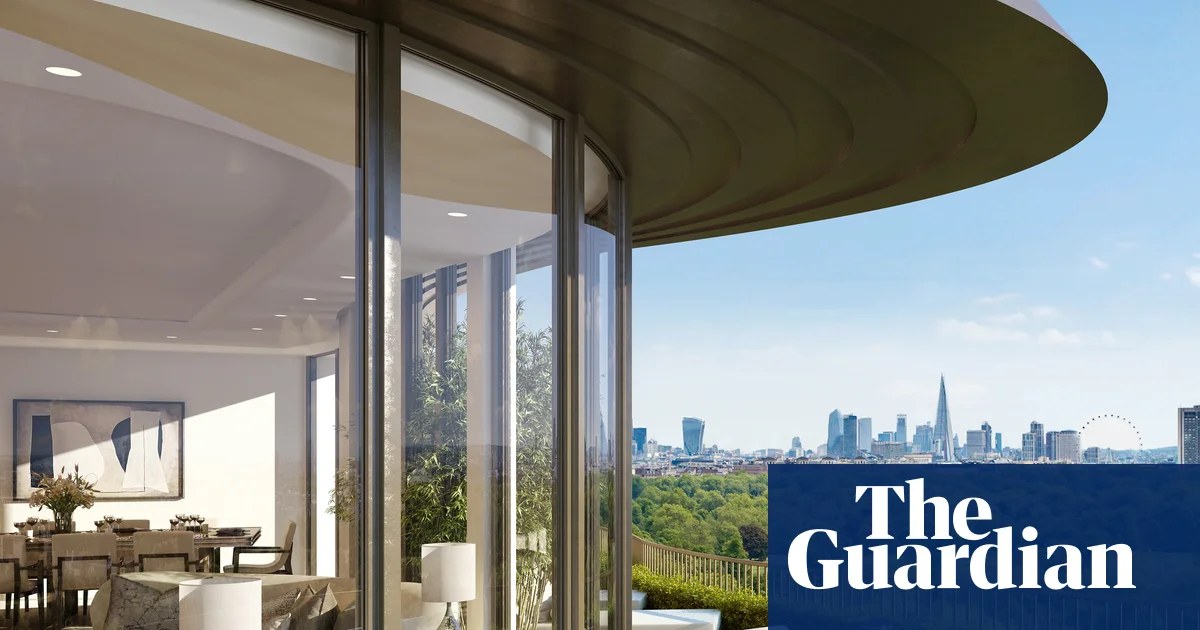
In February, the Times reported that Igor Babuschkin, the billionaire co-founder of Elon Musk’s AI venture xAI, had bought a £57m penthouse overlooking Hyde Park, in one of the biggest deals in the city this year.
Meanwhile, Providence House, the Reform UK treasurer Nick Candy’s former mansion on the grounds of the Royal Hospital Chelsea in London, was reportedly sold for £270m to the founder of the quantitative investment firm Quadrature Capital, Suneil Setiya. Aidan Devane, the chief executive of the firm, attributed its success partly to its proximity to AI labs in the city, telling the Financial Times: “We are probably in the golden age of London quant.”
Tech wealth, increasingly generated by gains in the AI sector, “has become a force at the very top of the prime central London market”, according to the super-prime estate agent Beauchamp Estates, which has a portfolio including a £42m sub-penthouse overlooking Hyde Park.
Jeremy Gee, a managing director at Beauchamp, says inquiries from tech and AI buyers have risen noticeably over the past year. “Some are international buyers, principally from the US, but a growing number are based here in London,” he says, adding that many have amassed their fortunes with remarkable speed.
“They tend to be younger, they move quickly and they are very clear about what they want. Location and quality matter most and they will pay a premium for something genuinely special,” he says. “London offers culture, history, world-class schools and a growing AI community of its own.”
Even the traditional bastions of old British money are adapting. According to Shona Baijal, the managing director of wealth at Coutts, the private bank long associated with the British aristocracy, the tech and AI sectors are increasingly a source of new clients. One of the key challenges, she says, is helping young entrepreneurs who are coming into vast amounts of wealth very quickly.
“A lot of people feel overwhelmed,” she says. “We have to discuss the emotional aspects of what it means to come into wealth. We might say: you’ve come into the money, but do not rush to do anything.”
Coutts found last month that eight out of 10 properties in London’s most exclusive neighbourhoods – such as Mayfair, Belgravia and Knightsbridge – now sell below asking price.
But sellers and property agents hoping the AI industry may ride to London’s rescue face a glaring problem: much of these new AI fortunes remains on paper.
At founder level, many are “paper rich, cash poor”, Baijal says – meaning until they sell their businesses or their shares vest, their wealth is largely theoretical.
At the same time, Britain’s wider economy is growing more reliant on the sector’s momentum. Last week, official figures showed that the UK economy grew by 0.7% in the third quarter, its fastest expansion in two and a half years, almost entirely due to strong and widespread growth in services, led by the IT sector. Separate analysis by Bloomberg found that roughly a quarter of UK economic growth this year had been powered by AI.
That dependence makes the prospect of an AI bubble bursting all the more dangerous. There have been months of warnings over the valuations of AI companies, and there has been a groundswell of public opposition to datacentre construction and worries around AI safety.
Investors were reminded again of the fragility of the AI trade last week after a scandal involving extramarital affairs and an alleged Chinese spy sent shares in one of the most valuable AI companies in the US, the chip designer Nvidia, tumbling.
Other market indicators have been flashing warning lights. This year one popular measure used by investors to assess whether a market is overvalued – the CAPE, or cyclically adjusted price-to-earnings, ratio – rose to its highest level since 2000, showing that the US stock market was unusually highly valued compared with its profits. That was before the Anthropic’s blockbuster debut.
For now, the AI boom’s physical footprint is unmistakable. In San Francisco, the average one-bedroom property now rents for $4,400 a month, up more than 25% from last year and nearly three times the US average. Landlords have been trying to capitalise on the boom, particularly in areas closest to the offices of the biggest AI companies including OpenAI and Anthropic.
Meanwhile in London, the transformation of King’s Cross from a railway goods yard once notorious for criminal activity into an international hub for tech and AI is well under way. Whether this new class of wealth is permanent, or a temporary flash in a historic tech bubble, is yet to be seen.