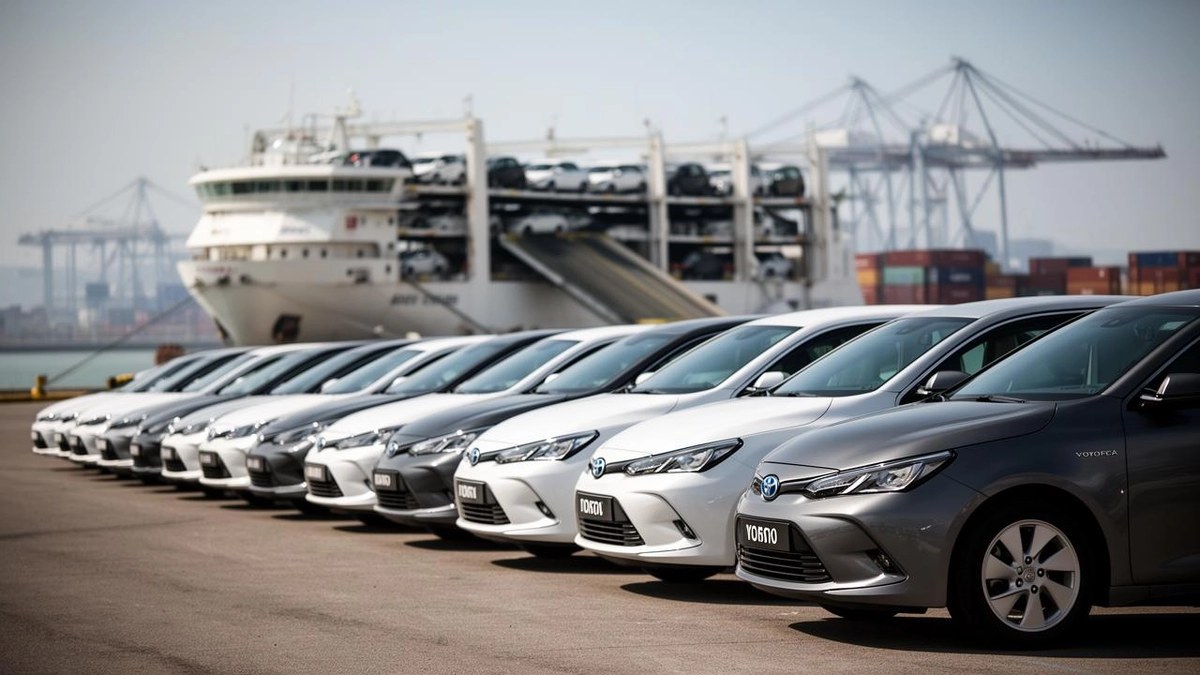
The European Union (EU) and China have reached an agreement to effectively cut Chinese hybrid vehicle exports to Europe by roughly half. The two sides arrived at this understanding during the second Trade and Investment Dialogue held in Beijing on October 8-9, which significantly increases the likelihood that Hyundai Motor and Kia hybrids produced in South Korea and exported to Europe will be excluded from regulatory measures.
Maroš Šefčovič, the EU's trade commissioner, said after the talks that Chinese hybrid and plug-in hybrid (PHEV) exports could decline by more than half. However, the joint statement issued by both sides did not specify the reduction volume, and China's Ministry of Commerce also did not disclose a concrete implementation plan.
The EU's targeting of Chinese hybrids stems from the steep surge in imports. Monthly Chinese hybrid imports to the EU skyrocketed roughly 13-fold from 3,800 units in October 2024 to 50,000 units in July of this year. In August, one out of every four hybrids sold in Europe was Chinese-made. According to market research firm Dataforce, Chinese brands captured a record 25.5% share of Europe's hybrid market that same month.
This surge is a balloon effect resulting from the EU's imposition of countervailing duties ranging from a minimum of 17% to a maximum of 35% on Chinese battery electric vehicles (BEVs) starting in October 2024. Chinese manufacturers shifted their strategy to hybrid exports to avoid the high tariffs. Chinese hybrids are subject to only a 10% base tariff.
South Korean Regulatory Concerns Eased... Windfall Gains Expected
The EU had initially been considering the introduction of emergency import restrictions (safeguards) in response to the surge in Chinese hybrid imports. Since safeguards apply to all imports rather than specific countries, concerns had been raised that Hyundai and Kia hybrids manufactured in South Korea and exported to Europe could also be subject to regulation.
Hyundai and Kia sold approximately 181,000 hybrids in Europe from January to August this year, of which about 63,000 units (35%) were produced in South Korea and exported. The Hyundai Kona and Santa Fe, along with the Kia Niro and Sorento hybrid models, are the representative vehicles exported from South Korea to Europe.
However, with the negotiations concluding in the form of China's voluntary export adjustment, the likelihood of South Korean-made vehicles being caught up in safeguards has diminished. Industry voices are instead anticipating windfall gains. BYD's Seal U DM-i and other Chinese PHEV SUVs compete directly with the Hyundai Tucson and Kia Sportage hybrids in terms of vehicle class and customer base. If Chinese volumes decline, price competition and promotional cost burdens could ease.
Renault CEO Calls It a "Major Milestone"... European Industry Welcomes Deal
The European automotive industry is welcoming the agreement. François Provost, CEO of Renault Group, described the deal as a "major milestone" in an interview with Bloomberg, saying, "Without an agreement, we would have faced a trade war with China, which would have been a losing situation for everyone."
Provost, however, urged EU policymakers to enforce strict "European-made" local content rules to ensure Chinese manufacturers make substantive investments in European supply chains rather than setting up simple assembly plants. "Chinese companies must invest at scale in the European value chain, not just build 'screwdriver factories,'" he emphasized.
Renault announced plans to invest an additional €10 billion (approximately $11.2 billion) in France over the next five years, though it added the caveat that this would be contingent on favorable political and social conditions.
Remaining Variables
Uncertainty surrounding the agreement's effectiveness persists. First, the joint statement did not include the hybrid reduction volume, and China has not disclosed an implementation plan. The EU is scheduled to discuss the outcome of these talks and follow-up measures at a summit in Brussels on October 15-16.
The expansion of Chinese manufacturers' local production in Europe is another variable. BYD plans to begin operations at its Hungarian plant, which involved a €4 billion (approximately $4.5 billion) investment, in the fourth quarter of this year. The first phase has an annual production capacity of 150,000 units, with plans to expand to 300,000 units in the long term. Once local production ramps up, the effect of export reductions could be diluted.
Concerns have also been raised that Chinese manufacturers facing a narrower export path to Europe could divert volumes to other markets such as South Korea. BYD launched the Sealion 6 DM-i PHEV SUV in South Korea in August at 37.5 million won (approximately $28,000), and on October 6 added an all-wheel-drive model at 41.9 million won (approximately $31,000). If the influx of Chinese hybrids into South Korea increases, it could also pressure Hyundai and Kia's domestic market.
Hybrids are a core vehicle segment for Hyundai Motor Group. According to the Korea Automobile & Mobility Association (KAMA), hybrids accounted for 34.1% (289,814 units) of new cars sold in South Korea in the first half of this year. Hyundai Motor posted record hybrid sales in the second quarter, and Kia is also pursuing a strategy of increasing its hybrid mix to reduce profitability pressure in its EV segment.
Meanwhile, analysts in China's auto industry suggest this agreement could mark a turning point in the approach to the European market. Chinese automakers will have no choice but to move beyond simple export expansion toward local production and supply chain development. The next competitive battleground for Chinese automakers in Europe will hinge on who can earn recognition as "European-made" from local markets, regulators, and the industrial ecosystem.