The U.S. Labor Department's August Producer Price Index (PPI) release is the primary focus for New York equity markets on Sept. 10. The prior session saw rising U.S. Treasury yields and surging oil prices chill investor sentiment, sending the Dow Jones Industrial Average and Nasdaq Composite to a third consecutive daily decline. If the PPI—which tracks wholesale-level price trends—confirms intensifying inflationary pressure, market participants warn that long-term yields could face further upward pressure, adding to the burden on equities.
Market consensus calls for August PPI to rise 0.4% month-over-month and 5.3% year-over-year, accelerating from July's flat monthly reading and 4.7% annual gain. The August Consumer Price Index (CPI) follows on Sept. 11, meaning price indicators will drive market direction for two consecutive days. According to economist forecasts compiled by Dow Jones, August CPI is expected to rise 0.4% month-over-month and 3.4% year-over-year.
The U.S. Labor Department released August PPI (final demand) at 8:30 a.m. EDT on Sept. 10 (Thursday), showing a 0.4% month-over-month increase that matched consensus, while the year-over-year figure rose 5.4%, exceeding expectations by 0.1 percentage point. July figures were revised upward to a 0.1% monthly gain and 4.8% annual increase. Core PPI excluding food and energy rose 0.2% month-over-month, below the 0.3% forecast, while the index excluding volatile trade services rose 0.3% monthly and 4.7% year-over-year. Following the release, U.S. stock index futures declined and Treasury yields spiked.
Note: Month-over-month figures are seasonally adjusted; year-over-year figures are not seasonally adjusted.
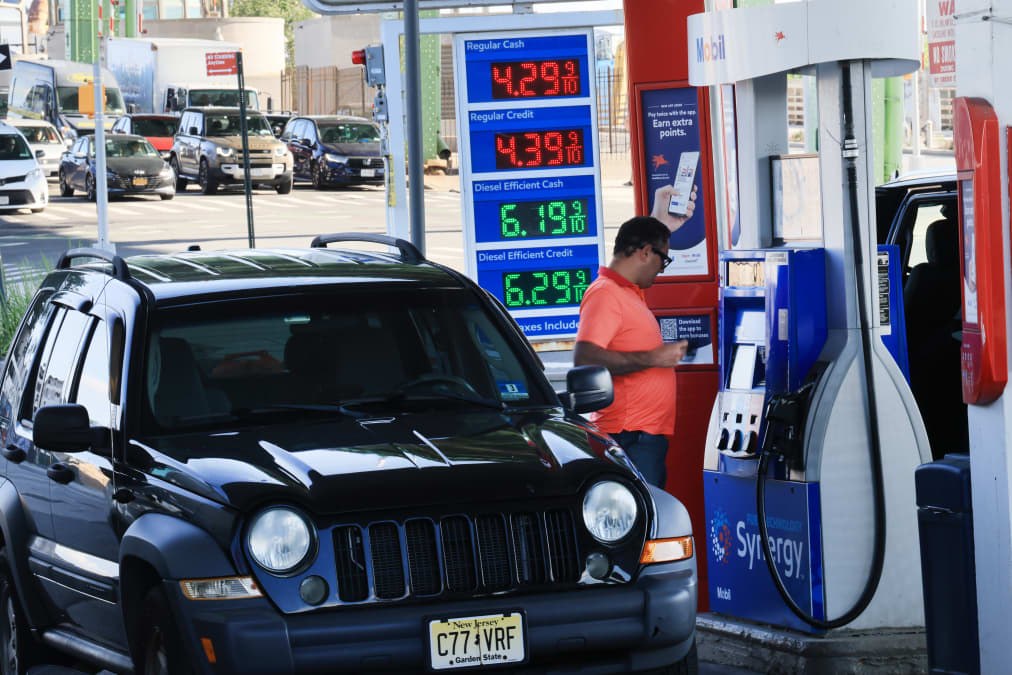
Energy led the upside. The final demand energy index rose 4.2% month-over-month, with diesel fuel surging 24.1% on an itemized basis. Overall goods prices climbed 1.1%, while services rose just 0.1%, largely attributable to a 2.3% increase in transportation and warehousing services. Price gains were more pronounced further upstream in the production chain, with intermediate demand processed goods up 11.5% year-over-year and unprocessed goods up 12.8%.
Looking at the year-to-date trajectory, the energy index spiked 10.5% month-over-month in March, 7.1% in April, and 8.2% in May, pushing the year-over-year PPI rate to 5.9% in May. While June and July saw momentum moderate as energy prices pulled back, August marked a reacceleration. Compared with the same month a year earlier (August 2025), when the rate stood at 2.7%, the current pace is nearly double.
Upstream price pressures also persist in Japan. The Bank of Japan's July Corporate Goods Price Index, released Aug. 13, rose 7.2% year-over-year, while the yen-based Import Price Index surged 29.1%. On a contract currency basis, import prices rose 17.7%, with the gap versus the yen-based measure reflecting exchange rate effects. Changes in the dollar-yen exchange rate driven by U.S. interest rate movements, alongside elevated oil prices, are key factors shaping Japanese import prices.
In the prior session on Sept. 9, the Dow Jones Industrial Average closed down 405.41 points (0.77%), while the Nasdaq Composite fell 0.64%. The U.S. Treasury Department's expanded bond-buying program fell short of market expectations, and supply concerns pushed the U.S. 10-year Treasury yield up to the 4.85% range. Meanwhile, heightened tensions between the U.S. and Iran drove North Sea Brent crude futures above $100 per barrel (approximately ¥15,000) and into the $101 range. The combination of rising rates and oil prices stoked fears of resurgent inflation, triggering broad-based selling. IBM and Chevron advanced, while Alphabet and Boeing declined.
Kyle Rodda, senior financial market analyst at Capital.com, noted that the renewed rise in oil prices capped equity market upside. He analyzed that the escalating U.S.-Iran standoff "raises the risk of a deeper and more protracted conflict between the two nations." Rodda explained that Brent's breach of the $100 threshold reflects market participants beginning to price in the risk that Middle East military activity endangers energy assets, as well as the possibility of a more prolonged blockade of the Strait of Hormuz.
That said, Rodda suggested that even as geopolitical risks continue to drive market volatility higher, attention in the latter half of the week will shift toward macroeconomic fundamentals. On U.S. price indicators, he said the Sept. 10 PPI and Sept. 11 CPI "could be the deciding factor in whether the Federal Reserve holds rates steady or hikes at next week's meeting."
Beyond PPI, Sept. 10's economic calendar includes initial jobless claims and August existing home sales. The U.S. Treasury Department's 30-year bond auction is also scheduled, drawing attention as a gauge for the direction of long-term yields. Depending on developments in the Middle East, oil prices could see further volatility, and the impact on equity markets will need to be carefully assessed.
On individual stocks, Oracle (ORCL) and Adobe (ADBE) are scheduled to report earnings after the close. As major technology names, both companies are drawing investor attention for clues on artificial intelligence (AI)-related demand. Oracle's focus will be on the sustainability of cloud business growth, while Adobe's will be on the revenue contribution of products incorporating generative AI features.
Macy's (M) reported May–July quarter results before the open. Revenue rose 1.1% year-over-year to $4.9 billion, with comparable-store sales up 2.7%, and the company raised its full-year sales and profit outlook. As a gauge of consumer spending momentum, the results are likely to have ripple effects across the broader retail sector.
Market participants increasingly believe that the PPI and CPI outcomes could significantly shift views on Federal Reserve policy. If wholesale prices surprise to the upside amid persistently high oil prices, sticky inflation concerns could reignite rate-hike speculation. Conversely, if results come in line with expectations, the case for holding the policy rate (target range 3.50%–3.75%) at the Sept. 15–16 Federal Open Market Committee (FOMC) meeting would be reinforced, providing support for equity markets.
Once added, BigGo Finance appears first in Google Search Top Stories, so you get the broadest, most up-to-the-minute, and most comprehensive global financial news first.